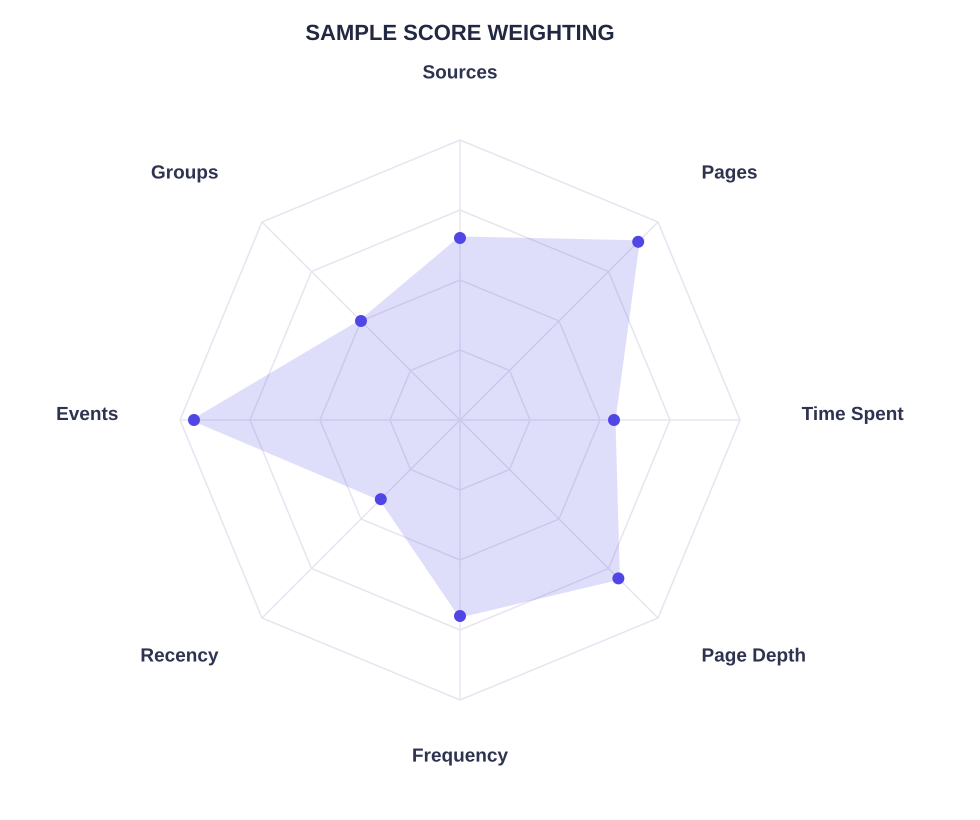
In Statistical Analysis, Behavior Scoring (Propensity Scoring) is a technique that is useful in predicting or estimating an outcome. This is done by applying scores to co-variates (independent variable) which may be of direct interest or it may be an interacting variable.
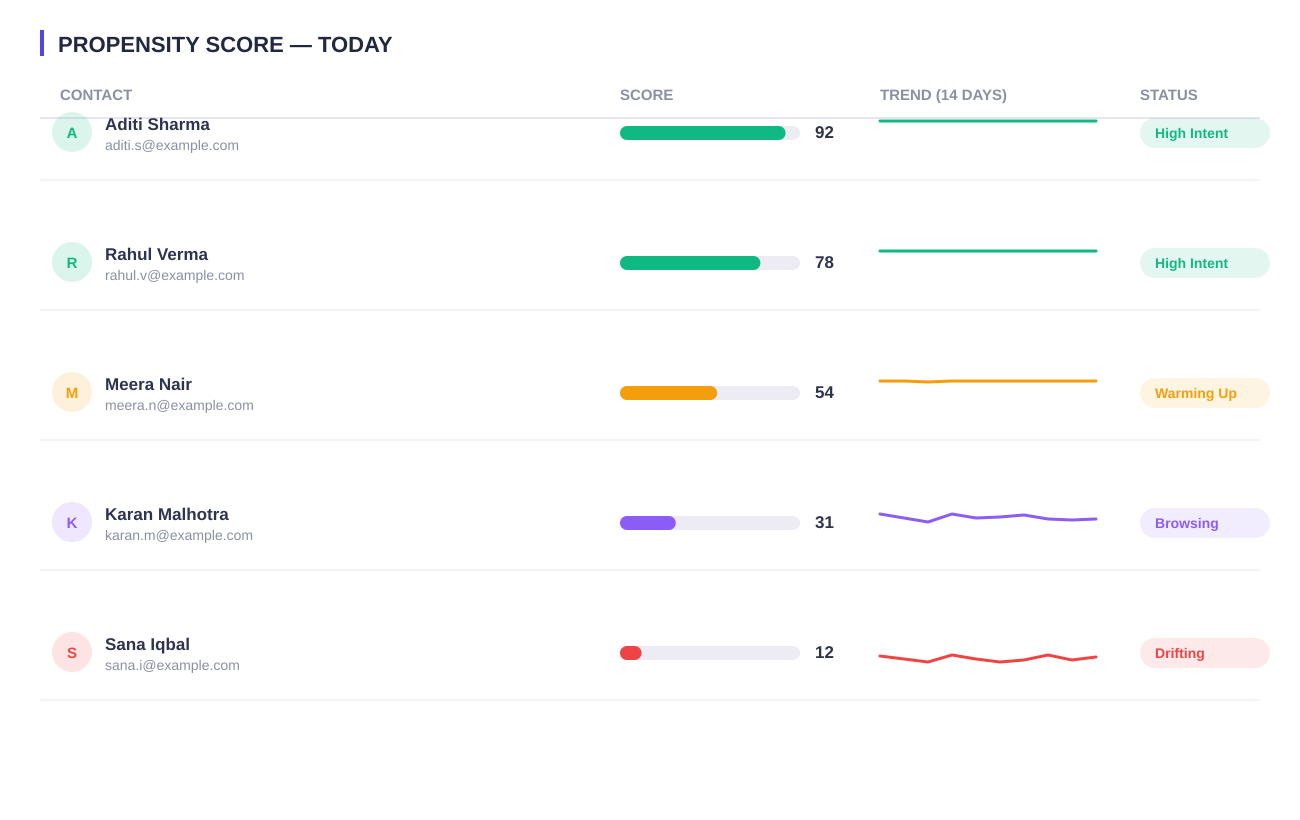
In Plumb5, behavior scoring models enable real-time engagement by assigning dynamic scores to predict customer intent. These scores trigger personalized, stage-aware automated workflows across the entire customer lifecycle.
Click here to view sample documentation on how you can use scoring for your customer interactions.
Assigning scores to source URLs helps in segmenting visitors coming from particular campaigns. You can even add scores to all interaction points and create custom attribution models, which help in identifying even the smallest contributing source.
Assigning different weights based on page type will help you understand the intent behind each visit. If your goal pages include 'add to cart' pages or 'wish list' pages, you would want to give them higher scores, so that you can easily segment visitors with high intent and assign conversion workflows based on scores.
Scoring duration, based on time spent also contributes in analyzing the intention.
Scoring Page Depth is crucial. Page depth scores help you in quickly identifying an opportunity and can be easily targeted using personalization work-flows.
Frequency scores, along with page depth scores, reveal urgency and intent associated with user engagement.
Assigning scores to Recency also helps in identifying drifting visitors. You can set negative scores for drifting visitors, so that you can be notified of negative scores.
Assigning scores to events helps in measuring intent. You can add high scores for key interactions like 'add to cart' or 'add to wish list' button.
You can also assign scores to fresh contact lists with a base score and assign a lead generation workflow to enable automation.
See propensity scoring set up against your own site and contact data.