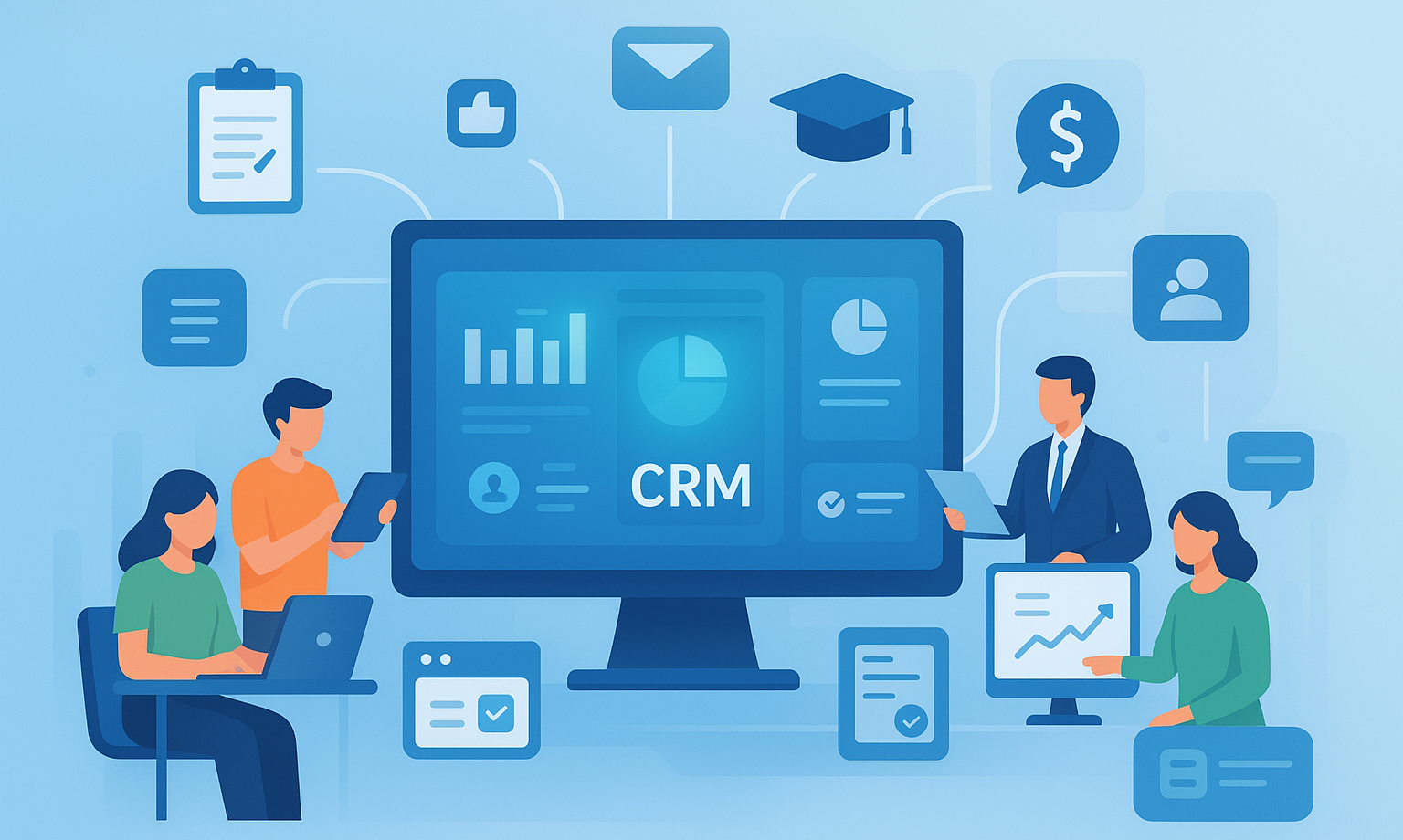
The global education technology market size was estimated at USD 163.49 billion in 2024 and is projected to grow at a CAGR of 13.3% from 2025 to 2030. Educational institutions need sophisticated CRM systems to manage increasing student inquiries, streamline admissions processes, and improve retention rates.
Student Lifecycle Management
EdTech CRMs manage complete student journeys from initial inquiry through graduation. The system tracks prospective student interactions, automates application follow-ups, monitors enrollment progress, and maintains alumni relationships for long-term engagement.
Modern education CRM platforms centralize student data across departments, eliminating the manual effort of searching through multiple systems for student information. This saves staff hours and allows them to focus on teaching and student engagement.
Admissions Process Automation
The admissions journey is the first touchpoint between students and institutions. Automated CRM systems streamline application processing, send personalized communication sequences, schedule campus tours and interviews, and provide real-time application status updates.
Key automation features include application deadline reminders, document submission tracking, scholarship opportunity notifications, and enrollment confirmation workflows that guide students through each step.
Plumb5 EdTech CRM Advantages
Plumb5 provides comprehensive student relationship management through unified student profiles, automated communication workflows, integration with learning management systems, real-time analytics and reporting, and mobile accessibility for staff and students.
The platform's education-specific features include application tracking, course enrollment management, payment processing integration, and automated compliance reporting for regulatory requirements.
Performance Metrics and Analytics
Track enrollment conversion rates, student retention percentages, communication response rates, and lifetime student value to measure CRM effectiveness. Successful implementations typically see 25% improvement in enrollment rates and 30% reduction in student churn.
EdTech CRM systems transform educational institutions from reactive service providers into proactive student success partners, driving enrollment growth and improving educational outcomes through systematic relationship management.
Student Retention Strategies
CRM systems identify at-risk students through engagement tracking, academic performance monitoring, attendance pattern analysis, and communication frequency measurement. Early intervention programs automatically trigger when students show warning signs.
Retention automation includes academic support resource recommendations, peer mentoring program enrollment, financial aid counseling appointments, and personalized check-in sequences from student success coordinators.
Parent and Guardian Engagement
Educational CRMs maintain parent contact information and communication preferences, sending automated updates about student progress, upcoming events, payment reminders, and important deadlines. This transparency improves satisfaction and reduces administrative burden.
Implementation Best Practices
Start with admissions process automation, gradually expand to student services, train all staff on CRM workflows, maintain data quality through regular audits, and regularly review analytics to identify improvement opportunities.